
CopperWave: the new part for the Multiwave Oscillator
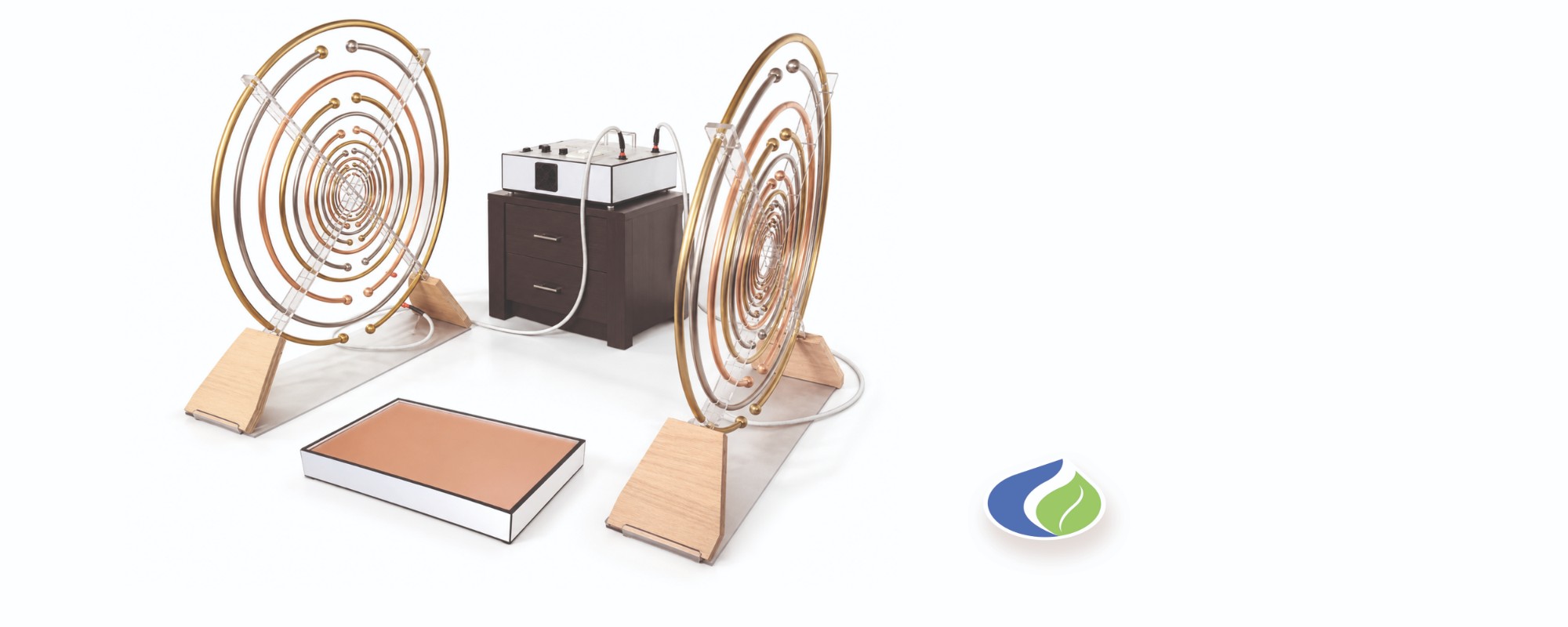
I have been working with the Multiwave Oscillator since 2019. In that time, one question has stayed with me, and it was about copper. Lakhovsky started out with antennas made of pure copper. Later he combined it with brass and stainless steel, and that is how we still build the antennas today. But the copper itself never let go of me. What happens when you extend the setup with a large copper surface, standing on its own, without being connected to anything?
The answer to that question became the CopperWave. Of everything we have made in recent years, this is the part I am most excited about myself. Why, I would rather show you than write it down.
That is why I would like to invite you to come and try the CopperWave for yourself: with us in Emmeloord, in the Netherlands, or in your own home during a demonstration of the Multiwave Oscillator. Below you can already read what it is and how it fits into your setup.
Why copper
Copper was Georges Lakhovsky's material. He worked with open copper circuits, and that is no coincidence: copper conducts electricity better than almost any other metal; only silver does slightly better. It is also the metal you see again in the rings of his antennas.
What the CopperWave is
The CopperWave is a 1.5 millimetre copper plate in a case of insulating rigid PVC. That is the same material as the housing of the Multiwave Oscillator, and at 48.5 by 35 by 7 centimetres it is roughly the same size too. Machine and plate visibly belong together, even when they stand side by side.
It has no plug and no cord: you don't connect it to anything. And it is deliberately not grounded, so it is not a grounding product. You place it on the floor within your setup while the MWO is running. That is all there is to it.

CopperWave
A copper plate in a case made of the same material as the Multiwave Oscillator. No connection and no grounding, for use within your MWO setup.
View the CopperWaveEarthed or not earthed
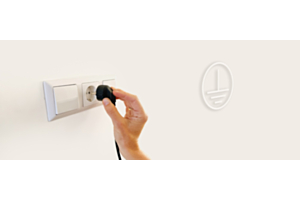
Earthing means connecting something to the earth through a conductor. At home this happens through the earth wire in the socket. An earthed object is therefore at the same potential as the earth, and any charge that reaches it drains away. That is what earthing in an electrical installation is for: if something goes wrong in an appliance, the current flows away through the earth wire and the residual current device switches off the circuit.
Not earthed means that a conductor is not connected to anything. The copper conducts just as well, but there is no path to the earth.
Online the two are often confused, including in a setup with the Multiwave Oscillator. A grounding mat or grounding plate is made to be connected; the CopperWave is made to stand free: no cord, no plug, and the copper sits in a case of insulating rigid PVC. Why we chose this, I will gladly tell you during a demonstration.
How it fits into your setup
A setup consists of the Multiwave Oscillator, two Lakhovsky antennas facing each other, and the cords that connect them to the machine. You can choose the antennas on a black foot, on a birch wood foot or in a stand with a Plexiglas frame. On a smooth floor, add the foot plates, and with the 200 centimetre set of cords you can set everything up with a little more room. The CopperWave joins them on the floor.
How the machine itself works, from Tesla coil to antennas, you can read on How does a Multiwave Oscillator work?
Something new every week
We write every week about water, energetic products and frequencies, and about what we come across in practice. No sales talk — just what we have looked into and measured ourselves.
Come and experience it yourself
A setup with the Multiwave Oscillator is something you really need to see, and the CopperWave even more so. You are welcome in Emmeloord, and we also come to your home to demonstrate and set up the MWO. Take your time, ask your questions, and try the CopperWave for yourself. I will also gladly tell you what it means to me.

Demonstration at home
We set up the Multiwave Oscillator in your home and take the time until you are familiar with the machine and everything that comes with it.
View the home demonstrationSources
- Bureau of Standards (United States), Copper Wire Tables, Circular No. 31, 3rd edition, 1914. On the International Annealed Copper Standard, the standard for the conductivity of copper, adopted in Berlin in 1913 by the International Electrotechnical Commission.
- R. A. Matula, "Electrical Resistivity of Copper, Gold, Palladium, and Silver", Journal of Physical and Chemical Reference Data 8, 1147 (1979).
- BS 7671, Requirements for Electrical Installations (IET Wiring Regulations, 18th Edition).
Last updated: October 2026



 Made with