
Copper Energy Ball: which three crystals do you choose?
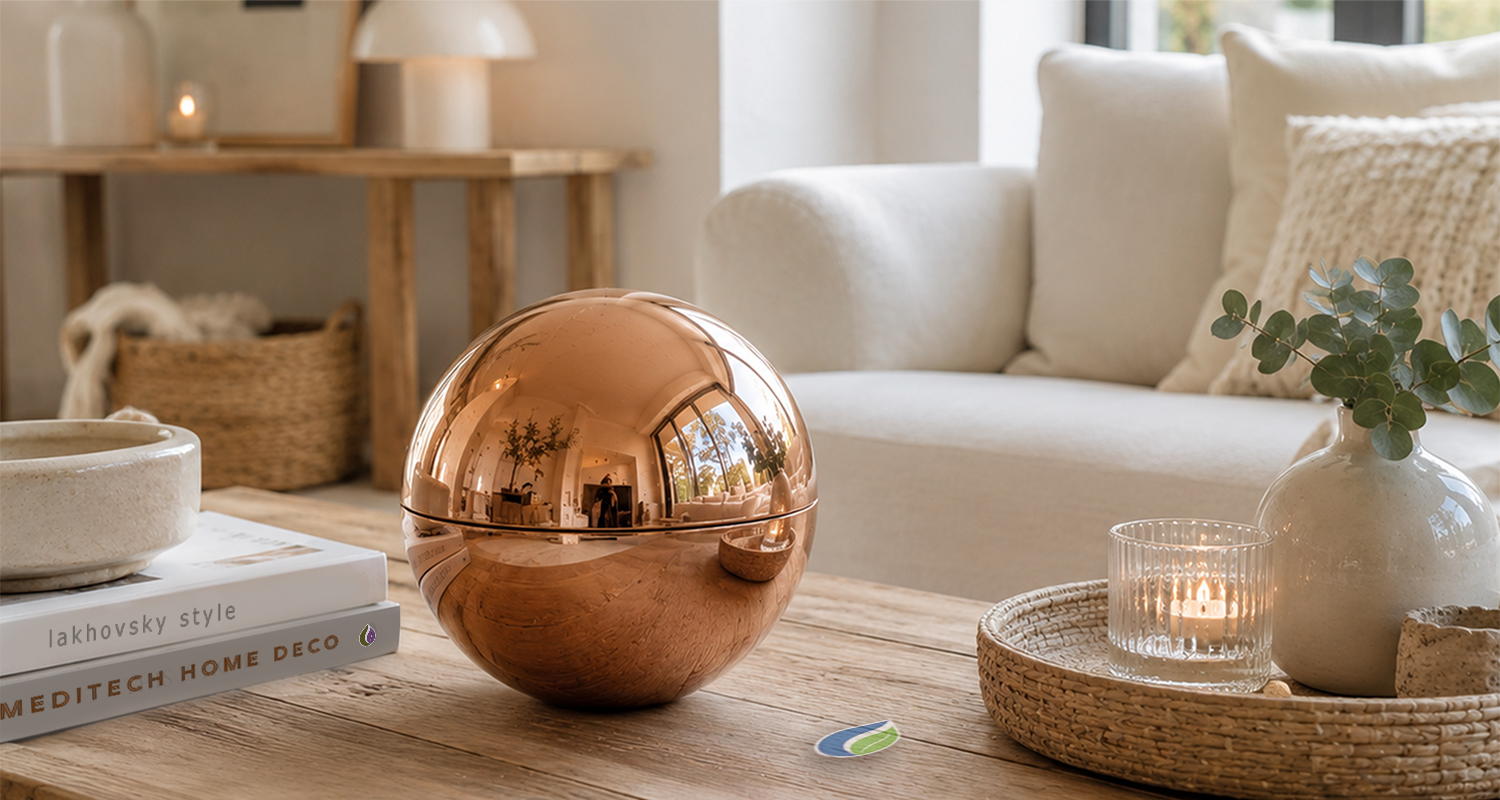
The Copper Energy Ball is delivered empty. That surprises people sometimes: you buy a copper sphere and there is nothing inside. Yet that is the idea — what goes in is up to you. Below you will find how much crystal fits inside, and which three stones work well together.
A sphere of copper, and nothing else
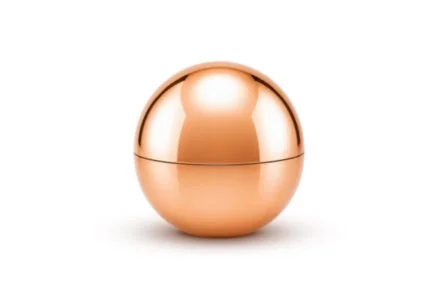
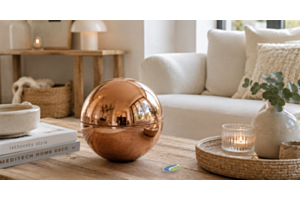
The ball is eight centimetres across, made of copper, with a flattened underside so it stays where you put it. It opens and closes. Within energetic traditions copper is seen as a conductive and grounding material, and the sphere as a shape is associated with wholeness and balance, because it has no beginning and no end.
What the ball does beyond that depends on what you put inside. Which is why we deliver it empty.
Why it comes empty
There is no filling that is right for everyone. One person is looking for calm, another wants to feel a little more firmly planted. A fixed combination would make that choice for you, and then it might as well have been any object at all.
There is another reason. The ball opens again. If something changes — a different season, a different period — you swap the stones. The ball stays the same, its contents do not.
It holds three pouches of 50 grams
The ball takes 150 grams of crystal. We supply our gemstones in pouches of 50 grams, so three is the maximum. You can fill it with one or two as well, but most people choose three: that gives you a combination rather than a single quality.
And that is where the question this article is about begins. Which three?
Five combinations that are often mentioned
Below are combinations you come across again and again in crystal guides and crystal shops: one well-known trio and four pairs. Three pouches don’t have to be three different stones. With a pair, take a second pouch of one of the two, and you decide which color leads. It remains a starting point, not a prescription.
Calm and depth: the Golden Triangle
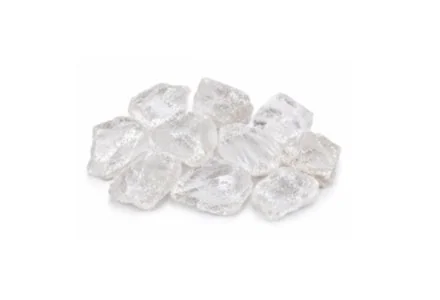
Amethyst, rock crystal and rose quartz together form the best-known trio among crystal lovers, and it is the combination most people start with. Amethyst is associated with calm, depth and reflection, rose quartz with mildness and connection, and rock crystal brings clarity to both. A combination for a bedroom or a place where you come to rest. Have a look at amethyst, rose quartz and rock crystal.
Grounding: tourmaline and hematite
Considerably more earthy in character: deep black next to a metallic sheen. Within energetic traditions tourmaline is associated with shielding, hematite with firmness and grounding. Want to keep the third pouch dark as well? Choose shungite, which is often combined with both. A combination for a workspace or a room where a lot happens. Have a look at tourmaline, hematite and shungite.
Sun and moon: sunstone and moonstone
That is what this pair is often called. Both are feldspars: sunstone warm orange and tumbled, moonstone rough and cream-white with a bluish sheen. Sunstone is associated with warmth and cheerfulness, moonstone with softness and intuition. That color contrast may well make them the loveliest pair of gemstones to see. Have a look at sunstone and moonstone.
Soft: rose quartz and moonstone
Pink and cream-white: the softest pair in the series. The sheen of moonstone moves with the light, so the stone looks a little different in every light. Rose quartz is associated with mildness and connection, moonstone with intuition. Have a look at rose quartz and moonstone.
Blue: lapis lazuli and moonstone
Lapis lazuli is one of the two most precious stones of the eleven, and it does not ask to be tucked away. Next to moonstone the deep blue stands out, and because lapis lazuli is tumbled, you also see smooth next to rough. Rock crystal is often mentioned alongside lapis lazuli too. Lapis lazuli is associated with insight and truth, moonstone with intuition. Have a look at lapis lazuli and moonstone.
And green aventurine and blue topaz?
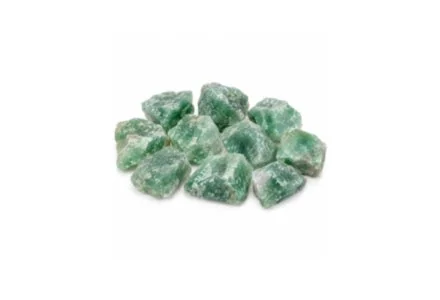
Green aventurine is often combined with rose quartz: green next to soft pink. With sunstone added you also come across it as a trio, for a time when something new begins. Blue topaz, the other precious stone, has no fixed combination. In terms of color it goes alongside rock crystal and moonstone; keep the other stones quiet, and the light blue stands out. Have a look at green aventurine and blue topaz.
Not sure? Start with rock crystal
If the choice is difficult, take rock crystal as your first pouch. It is the clearest and most neutral of the eleven, and it is also the only stone built into every Lifefield and Personal Polarizer. If there is one stone that goes with everything, it is this one. Then add two more that appeal to you for whatever reason — which is, in the end, the best criterion there is.
From a single stone to a polarizer
If after a while you notice that one stone stands out for you, there is a next step. The Lifefield and Personal Polarizers have the same crystals built in, a different one per model. Amethyst is in the Gold models, hematite in the Pro, shungite in the Powerful, rose quartz in the RoseQuartz and tourmaline in the Plus and the Antenna. Our page about crystals has a table showing which stone sits in which model.
Finally
The Energy Ball asks something of you that most products do not: a choice. That takes a moment's thought, but it does give you an object that is yours rather than the manufacturer's. Have a look at all eleven stones or start with the Copper Energy Ball itself.
 |  |
Something new every week
We write every week about water, energetic products and frequencies, and about what we come across in practice. No sales talk — just what we have looked into and measured ourselves.


 Made with