
Blogs about Nutrition
- Posted: 7 May 2025
 Read more »
(Updated: April 13, 2026) Electroculture is a method that has once again garnered significant attention among ecological gardeners and researchers in recent years. Although the term may sound futuristic, its foundation is inspired by principles from physics. This technique focuses on harnessing the Earth’s natural electromagnetic and atmospheric energy fields to support plant vitality. In this article, we explore what electroculture is, how pioneers explored this power, and how electroculture in the garden can contribute to healthy soil and resilient crops.
The history: a forgotten technique rediscovered
The principles of electroculture are not new. As early as the 18th century, scientists were experimenting with the influence of electricity on crop growth. One of the best-known pioneers was the Frenchman Justin Christofleau, who, in the 1920s, conducted research into the use of atmospheric energy as a potential alternative to the emerging field of chemical agriculture.
Today, it is primarily
- Posted: 21 October 2024Last updated: October 2026
 Read more »
The pineal gland, sometimes called the "third eye", is a small but powerful organ in the brain. Although it is only the size of a pea, this gland has fascinated scientists, philosophers and spiritual teachers for centuries. But what exactly is the pineal gland? What does it do? And why is it seen in some cultures as a spiritual gateway? We also look at calcification of the pineal gland: what it is, and what we do and don't know about it. Read on.
In short: the pineal gland (epiphysis) is a pea-sized gland in the middle of your brain. It makes the hormone melatonin, mainly when it is dark. That is how it tells your body that it is night.
What is the pineal gland?
The pineal gland, also known as the epiphysis, is a small, cone-shaped organ in the centre of the brain, between the two hemispheres and above the thalamus. It is about the size of a pea and has a characteristic pine-cone shape, which is where its name comes from. The pineal gland is part of the endocrine system: the glands that
- Posted: 9 October 2024
 Read more »
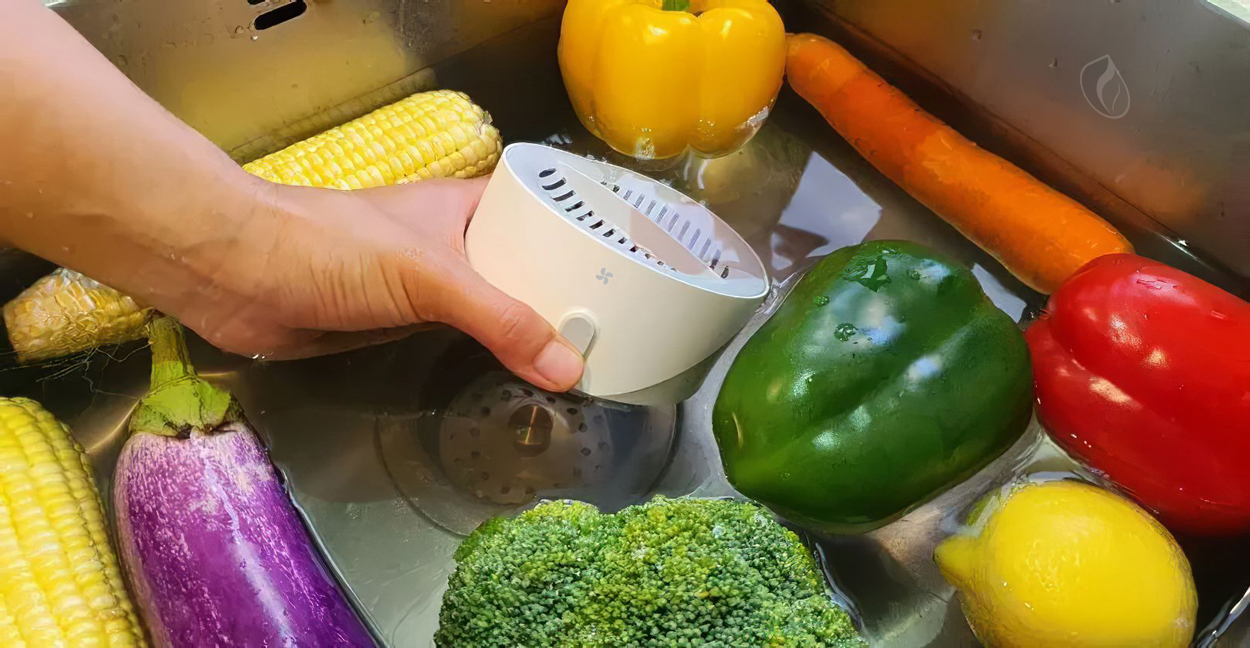
For many people, washing fruits and vegetables is an integral part of a healthy lifestyle. By thoroughly rinsing and cleaning produce before eating it, you can help reduce dirt and unwanted residues. AquaPure was developed as a practical tool to assist with this.
Using a cleaning process based on water, salt, and electrolysis, AquaPure offers a simple way to give fruits and vegetables an extra clean. In this blog, you’ll learn how AquaPure works, why many users choose this method, and how it fits into a mindful kitchen routine.
Why Cleaning Fruits and Vegetables Is Important
Fruits and vegetables often travel a long way before they end up on your plate. During cultivation, transport, and storage, produce can come into contact with dust, dirt, and other residues. That’s why many consumers choose to wash their groceries thoroughly before eating or preparing them.
Proper cleaning is a simple step that fits into a mindful and hygienic lifestyle.
What is AquaPure?
AquaPure is a compact, rechargeable
- Posted: 26 December 2023Last updated: October 2026
 Read more »
Almost every jar of magnesium carries a second word: citrate, bisglycinate, oxide. That word is not a detail. It tells you what the magnesium is bound to, and that determines how much magnesium fits into a capsule and how easily your body absorbs it. In this blog we go through the forms you will find in our shop.
What does citrate or oxide on a jar of magnesium mean?
Magnesium never occurs on its own in nature. It is always bound to another substance: to oxygen (oxide), to citric acid (citrate), to the amino acid glycine (bisglycinate) or to chlorine (chloride). That partner adds weight. That is why a label often shows two figures: how much of the compound is in it, and how much magnesium that leaves.
You will also often come across the terms organic and inorganic. Organic forms are bound to an organic acid or an amino acid, such as citric acid, malic acid or glycine. Inorganic forms are bound to oxygen (oxide), chlorine (chloride), sulphuric acid (sulphate) or carbonic acid (carbonate).




 Made with