
Monthly Archives: October 2026
- Posted: 19 October 2026Categories: Blogs about Environment
 Read more »
Walking barefoot on the grass, sleeping on a grounding sheet, working with your hand on a grounding mat: in just a few years, grounding has grown from a niche habit into something many people are curious about. You can read all sorts of things about it online. We stick to what can be explained and measured: what happens, in terms of physics, when your body is connected to the earth. It is more interesting than you might think.
What is grounding?
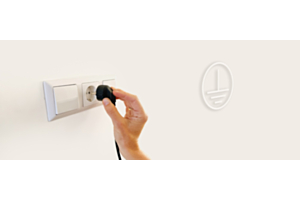
Earthing means connecting something to the earth through a conductor. At home, that is done by the earth wire: the green and yellow wire in every socket, which runs through the consumer unit to the earthing of your house. If the casing of an appliance becomes live, the current flows away through that wire and the RCD switches the circuit off.
By grounding or earthing, people mean grounding themselves: outdoors with bare feet on the ground, indoors with a grounding mat or sheet that is connected to that same earth wire.
What happens when you ground
- Posted: 14 October 2026Categories: Blogs about Multiwave Oscillator
 Read more »
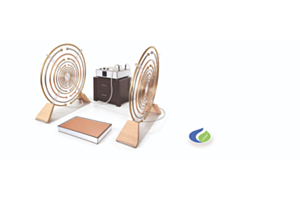
I have been working with the Multiwave Oscillator since 2019. In that time, one question has stayed with me, and it was about copper. Lakhovsky started out with antennas made of pure copper. Later he combined it with brass and stainless steel, and that is how we still build the antennas today. But the copper itself never let go of me. What happens when you extend the setup with a large copper surface, standing on its own, without being connected to anything?
The answer to that question became the CopperWave. Of everything we have made in recent years, this is the part I am most excited about myself. Why, I would rather show you than write it down.
That is why I would like to invite you to come and try the CopperWave for yourself: with us in Emmeloord, in the Netherlands, or in your own home during a demonstration of the Multiwave Oscillator. Below you can already read what it is and how it fits into your setup.
Why copper
Copper was Georges Lakhovsky's material. He worked with open copper
- Posted: 14 October 2026Categories: Blogs about Water
 Read more »
Anyone looking for a copper water bottle or cup soon comes across the question of whether it really is copper. It is a fair question. You cannot see from the outside what a bottle is made of, and copper costs a good deal more than steel or aluminium. Below you can read which tests there are, what they do and do not tell you, and how we had our own bottles and cups tested.
How pure is pure copper?
Pure copper is not one fixed number. Copper of 99.9% and above is mainly used in cables and electronics, because it conducts electricity so well. For a water bottle, something else matters more: strength. Very pure copper is soft. It dents easily and loses its shape in daily use. A small amount of another metal makes the copper harder, so a bottle lasts for years.
Our bottles and cups are made of around 99.1% copper. The rest is mostly zinc, about 0.9%. You will often see "100% copper" too. What people mean by that is a bottle made entirely of copper, without a core of another metal. In practice
- Posted: 6 October 2026Categories: Blogs about Environment
 Read more »
If you have ever sat in a car during a heavy thunderstorm, you will probably have heard it: stay put, you are safe in the car. That is true, but usually for a different reason than people think. It is not the rubber tyres that protect you. It is the metal body around you. It acts as a Faraday cage, and the same principle is at work in things you use every day, from your microwave to the little box you keep your car key in.
How does a Faraday cage work?
In 1836 the scientist Michael Faraday built a room and lined it entirely with metal foil. He exposed the outside to strong electrical charges and stepped inside himself with a measuring instrument. Inside, he measured nothing.
That is the heart of it. A shell of conductive material, such as metal or a fabric containing metal, catches electrical charge and electromagnetic waves on the outside and leads them around the space within. Whatever is inside notices very little. It also works the other way round: a signal sent out from inside the



 Made with