
Real copper water bottle or cup: how pure is pure copper?
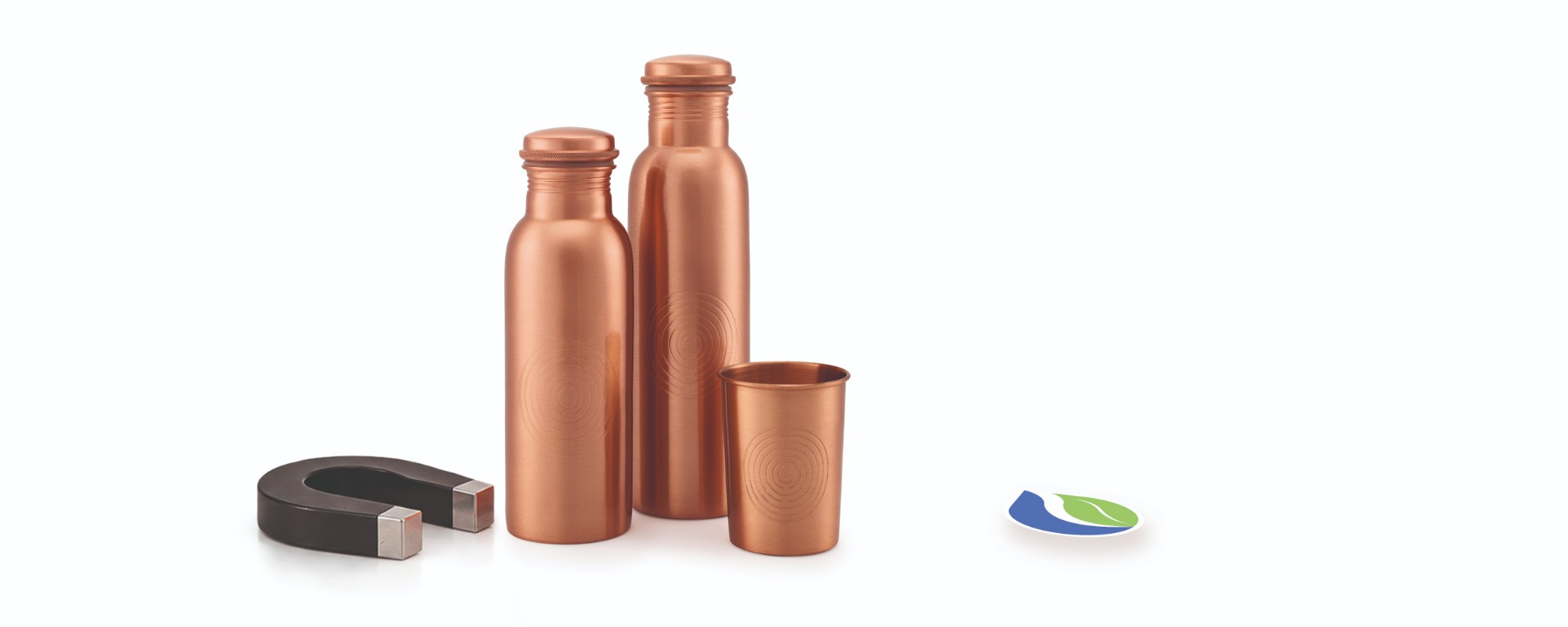
Anyone looking for a copper water bottle or cup soon comes across the question of whether it really is copper. It is a fair question. You cannot see from the outside what a bottle is made of, and copper costs a good deal more than steel or aluminium. Below you can read which tests there are, what they do and do not tell you, and how we had our own bottles and cups tested.
How pure is pure copper?
Pure copper is not one fixed number. Copper of 99.9% and above is mainly used in cables and electronics, because it conducts electricity so well. For a water bottle, something else matters more: strength. Very pure copper is soft. It dents easily and loses its shape in daily use. A small amount of another metal makes the copper harder, so a bottle lasts for years.
Our bottles and cups are made of around 99.1% copper. The rest is mostly zinc, about 0.9%. You will often see "100% copper" too. What people mean by that is a bottle made entirely of copper, without a core of another metal. In practice it is never literally one hundred percent; a trace of something else always remains.
The magnet test
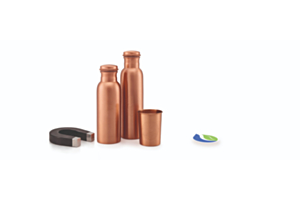
You can do this test at home in a few seconds. Copper is not magnetic. Hold a magnet against the bottle or cup: if it does not stick, there is no iron or steel underneath the copper. A fridge magnet will do; with a stronger magnet you will see it even more clearly.
In all honesty, a magnet does not tell you everything. Brass, aluminium and most types of stainless steel are not magnetic either. The magnet test rules out one thing, and it does that well: steel or iron with a layer of copper around it.
Weight and the inside
Copper is heavy. One cubic centimetre weighs almost 9 grams, more than three times as much as aluminium. A bottle of thin aluminium with a copper-coloured layer therefore feels noticeably light. Weight alone proves nothing, because the thickness of the wall also plays a part, but it is a first clue.
Then look inside the neck of the bottle. The inside should be bare copper, without lacquer or a coloured layer, because that is what your water is in contact with. Our copper water bottles and cups only have a protective layer on the outside, which keeps the shine looking good. The inside is bare copper and darkens a little over time. That is copper reacting with air and water, and it is simply part of it.
 |  |  |
What only a laboratory can measure
You cannot determine at home exactly what percentage of copper a bottle contains. For that, a bottle goes to a laboratory. Using X-ray fluorescence, XRF for short, or a chemical analysis, the amount of each element in the metal is determined.
The composition of our bottles and cups has been measured three times, by two laboratories accredited to the international standard ISO/IEC 17025. The results lie between 99.10% and 99.25% copper, with the rest mainly zinc.
Is it safe to drink from?
That is a second question, and at least as important. In Europe, rules apply to all materials that come into contact with food and drink (EU Regulation 1935/2004). They must not release substances in amounts that could be harmful, and must not change the smell or taste. Our bottles and cups have been independently tested against these rules.
First, a panel tasted and smelled water that had been standing in the bottle, next to water that had not. There was no difference. Then the amount of metal that ends up in the water was measured, following the European guide on metals in contact with food. This is done three times in a row with the same bottle, each time two hours with warm water followed by a full day lukewarm. That is warmer than you would normally use a copper bottle.
A small amount of copper ends up in the water. With a copper bottle, that is to be expected. The amount stayed within the European limit, and by the third round no copper could be detected any more. Lead stayed well below the limit; nickel, chromium and the other metals measured were not detectable.
For daily use, that means: use your bottle for water. Acidic drinks, such as juice or water with lemon, dissolve more copper, and a copper bottle is not meant for those.
Something new every week
We write every week about water, energetic products and frequencies, and about what we come across in practice. No sales talk — just what we have looked into and measured ourselves.
Certainty in your own hands
You buy a copper bottle for years, so you want to know what you have in your hands. With a magnet and a look inside the neck, you get a long way at home. Do you have a question about our bottles and cups that is not answered here? Feel free to ask, we are happy to tell you what we know.
Sources
- Regulation (EC) No 1935/2004 of the European Parliament and of the Council of 27 October 2004 on materials and articles intended to come into contact with food.
- EDQM, Council of Europe (2024). Metals and alloys used in food contact materials and articles, technical guide, 2nd edition.
- JIS H 1292:2005. Methods for X-ray fluorescence spectrometric analysis of copper alloys.
- ISO/IEC 17025:2017. General requirements for the competence of testing and calibration laboratories.
Last updated: October 2026
 Made with