
Page 3 - Blog
- Posted: 9 February 2025
 Read more »
It is an icy cold night in the vast wilderness of Yellowstone. The full moon casts a silver glow over the snowy landscape, while a lone wolf, known as Skar, moves silently. His golden eyes scan the horizon, searching for any sign of life. But he does not rely solely on his sight. No, deep in his core, he senses something most creatures will never experience: the language of vibrations.
An Invisible Sense
Wolves are known for their sharp sense of smell and excellent hearing, but few people know that these hunters are also sensitive to vibrations. As Skar prowls through the frozen wilderness, he presses his paws firmly into the ground. He feels the subtle rhythm of the earth beneath him, like a secret message only the initiated can understand. In the distance, a herd of deer moves slowly, their hooves sending faint vibrations through the ground. Skar perks up his ears, but he hears nothing. Yet he knows: beyond that hill, a chance for survival awaits.
His heartbeat quickens, and his breath
- Posted: 2 February 2025
 Read more »
Eowyn, a majestic kingfisher with vibrant blue and orange feathers, sits silently on a branch above a rippling stream. Her sharp eyes are fixed on the water’s surface, but it is not just her vision that helps her in her quest for food. For Eowyn, everything is frequency – a symphony of signals and vibrations that shape her world.
Frequencies of Sound
Eowyn’s surroundings are alive with sounds. The gentle rustling of leaves, the melodic singing of other birds, and the constant murmur of the stream form a harmony that keeps her alert. For Eowyn, each sound is a unique frequency that tells her what is happening in her world. A slight change in pitch can signal an approaching danger, while a deep vibration informs her of a fish jumping in the water.
Eowyn perks up her ears and interprets every wave of sound. Even the smallest disturbance in the natural harmony can alert her and focus her attention on what truly matters: finding her next meal.
The Mystery of Light Frequencies
As the sun filters
- Posted: 29 January 2025
 Read more »
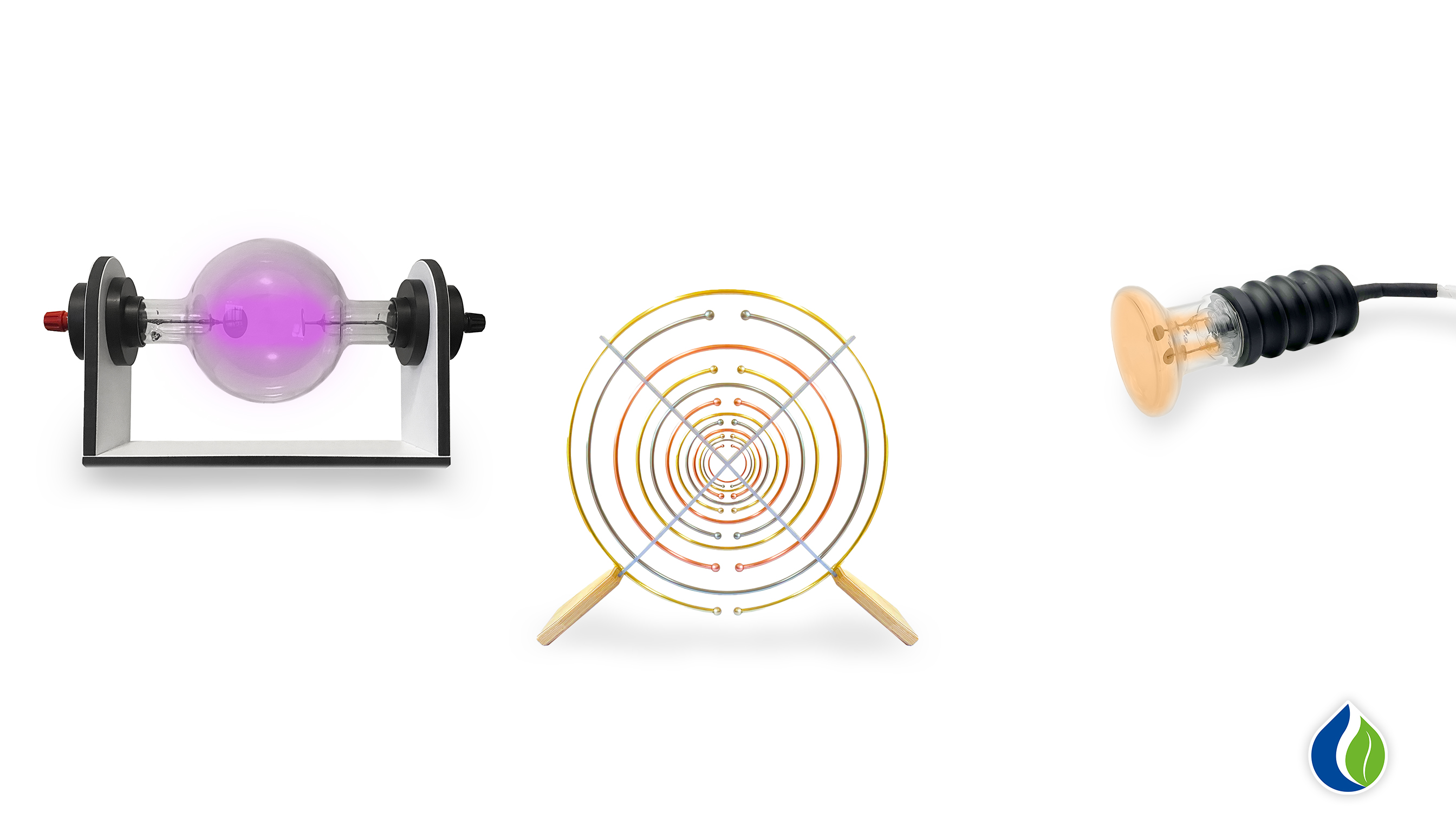
At Meditech Europe, the specialist in innovative frequency technology, we understand how important it is to choose the right equipment for specific needs. As an authority on frequency treatment, in plants for example, we offer in-depth insights into how the Rife Phanotron, Rife Tube, and Lakhovsky Antennas work. These devices, which can be connected to the Multiwave Oscillator (MWO), represent advanced technologies with unique applications. Discover below how they generate frequencies and what their main differences are.
What Is a Rife Phanotron and How Does It Work?
The Rife Phanotron is a groundbreaking device that converts electrical signals into electromagnetic waves via a gas-filled tube. When connected to the Multiwave Oscillator, the Phanotron emits all frequencies simultaneously, allowing you to effectively reach a broad spectrum. This device is designed for versatility and precision.
- Posted: 20 January 2025
 Read more »
Imagine this: you are standing under a dark sky, far away from city lights, and suddenly a dance of colors appears on the horizon. Green veils, interspersed with shades of pink, purple, and sometimes even red, gracefully move through the air. This magical phenomenon is known as the Northern Lights, or Aurora Borealis. It is a natural spectacle that has fascinated people for centuries, evoking a sense of awe for the forces of the universe.
The Northern Lights occur when charged particles from the sun enter Earth’s atmosphere. These particles, mainly electrons and protons, are guided by Earth’s magnetic field toward the poles. There, they collide with oxygen and nitrogen molecules in the upper atmosphere. These molecules become excited – they temporarily gain extra energy. When the molecules return to their original state, they release this energy as light. The result is the colorful display we call the Northern Lights.
A Journey Through Light: When to See the Northern Lights
The best time
- Posted: 21 December 2024
 Read more »
What is Functional Medicine?
Functional medicine is an innovative approach to healthcare that focuses on addressing the root causes of disease. Rather than merely treating symptoms, functional medicine aims to understand how and why illness occurs. It offers a personalized approach that considers genetics, lifestyle, and environmental factors to bring the body back into balance.
How Does Functional Medicine Differ from Traditional Medicine?
Functional medicine fundamentally differs from traditional medicine by focusing on the interplay between all systems in the body. While traditional medicine often treats specific complaints, functional medicine looks at the bigger picture. For instance, a patient with chronic fatigue won’t just receive energy-boosting medication but will undergo a comprehensive analysis of their diet, sleep, hormones, stress, and toxins.
Key Principles of Functional Medicine
Biochemical Uniqueness - Every individual is different. Functional medicine acknowledges this
- Posted: 20 November 2024
 Read more »
Christmas, a time of joy, togetherness and, of course, gifts. While many of us look forward each year to exchanging beautifully wrapped gifts under the twinkling Christmas tree, we rarely stop to consider how this custom originated. The idea of Christmas gifts has a rich and fascinating history that dates back far beyond today's modern celebrations.
A Historical Retrospective
The origins of Christmas gifts can be traced to several cultural and historical traditions. One important source is the celebration of the ancient Roman festival called Saturnalia, which took place around the winter solstice. During Saturnalia, gifts were given as symbols of goodwill and friendship. These gifts were often exchanged to promote the spirit of togetherness.
In addition, Christian tradition also contributed to the evolution of Christmas gifts. The story of the Three Wise Men who brought gifts of gold, frankincense and myrrh to the newborn Jesus has had a lasting influence on the idea of gift giving during
 Read more »
On Sunday 25 October 2026 the clocks go back one hour. In the UK, 2am becomes 1am again; in most of mainland Europe, 3am becomes 2am. You get an extra hour in bed, and from that weekend it is light an hour earlier in the morning and dark an hour earlier in the evening.
One hour sounds like nothing. Yet many people feel it for days: awake before the alarm, tired by nine in the evening, or the other way round. Your body does not run on the clock on the wall, it runs on light. To be honest, we think it is time this stopped, and many of our readers feel the same. Below you can read why the change is so noticeable, why it is still with us, and what you can do to help your rhythm along for as long as it is.
When do the clocks change?
Clocks go back 2026: Sunday 25 October. In the UK at 2am BST, back to 1am GMT. In the Netherlands, Germany and most of Europe at 3am, back to 2am. The night is one hour longer.
Clocks go forward 2027: Sunday 28 March. In the UK at 1am GMT, forward to 2am BST. In
- Posted: 21 October 2024Last updated: October 2026
 Read more »
The pineal gland, sometimes called the "third eye", is a small but powerful organ in the brain. Although it is only the size of a pea, this gland has fascinated scientists, philosophers and spiritual teachers for centuries. But what exactly is the pineal gland? What does it do? And why is it seen in some cultures as a spiritual gateway? We also look at calcification of the pineal gland: what it is, and what we do and don't know about it. Read on.
In short: the pineal gland (epiphysis) is a pea-sized gland in the middle of your brain. It makes the hormone melatonin, mainly when it is dark. That is how it tells your body that it is night.
What is the pineal gland?
The pineal gland, also known as the epiphysis, is a small, cone-shaped organ in the centre of the brain, between the two hemispheres and above the thalamus. It is about the size of a pea and has a characteristic pine-cone shape, which is where its name comes from. The pineal gland is part of the endocrine system: the glands that
- Posted: 9 October 2024
 Read more »
For many people, washing fruits and vegetables is an integral part of a healthy lifestyle. By thoroughly rinsing and cleaning produce before eating it, you can help reduce dirt and unwanted residues. AquaPure was developed as a practical tool to assist with this.
Using a cleaning process based on water, salt, and electrolysis, AquaPure offers a simple way to give fruits and vegetables an extra clean. In this blog, you’ll learn how AquaPure works, why many users choose this method, and how it fits into a mindful kitchen routine.
Why Cleaning Fruits and Vegetables Is Important
Fruits and vegetables often travel a long way before they end up on your plate. During cultivation, transport, and storage, produce can come into contact with dust, dirt, and other residues. That’s why many consumers choose to wash their groceries thoroughly before eating or preparing them.
Proper cleaning is a simple step that fits into a mindful and hygienic lifestyle.
What is AquaPure?
AquaPure is a compact, rechargeable
- Posted: 25 July 2024Last updated: October 2026
 Read more »
Anyone looking for Hulda Clark's zapper soon comes across the Swing Zapper. In this blog you can read where the device comes from, which versions there are and how to use it.
What is the Swing Zapper
The Swing Zapper is a small device running on two AA batteries that generates frequencies, intended for use with plants. It has one button and one fixed programme. There is nothing to set: the device varies the frequency itself.
Hulda Clark
The design goes back to the zapper of the American Hulda Clark (1928–2009). In the 1990s she built a simple device that gave off mild electrical pulses. She developed it from her own theories about parasites, which were never scientifically confirmed and remain controversial to this day. Even so, the zapper became the best-known part of her work, and it still has a loyal group of users. She described her ideas in a series of books.
Three versions
All three Swing Zappers run the same programme. The difference lies in the electrodes.




 Made with