
The influence of Georges Lakhovsky's technique on plants
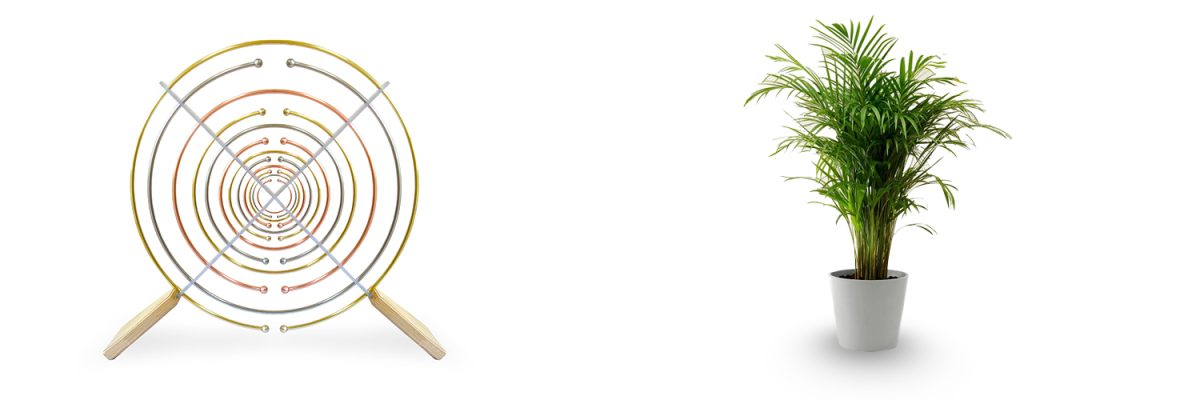
Natural processes have fascinated researchers and nature lovers for centuries. One question keeps coming back: what do energy waves do to living organisms, and to plants in particular? Georges Lakhovsky was already looking for the answer a hundred years ago, and the Multiwave Oscillator (MWO) that grew out of his work still attracts a great deal of interest. In this article we look at what Lakhovsky saw in plants, and at what modern research adds to it.
The Multiwave Oscillator was developed by Georges Lakhovsky in the early twentieth century. The device works with a broad spectrum of electromagnetic frequencies at the same time. Lakhovsky assumed that every living cell vibrates by itself, and that a field with many frequencies can support that natural vibration. He spoke of cellular oscillation, also called biological resonance.
Lakhovsky and the geraniums
Lakhovsky began his research with plants. In December 1924 he infected a series of geraniums with Agrobacterium tumefaciens, a bacterium that causes galls in plants. Around one of those plants he placed a simple open ring of copper wire, about thirty centimetres across: an oscillating circuit. The plants without a ring declined and died. The plant inside the copper ring recovered and grew vigorously in the months that followed (source 1). According to Lakhovsky, his results were repeated elsewhere, including by Professor Vincenzo Rivera in Italy. These experiments eventually led to the Multiwave Oscillator.
What modern research shows
Lakhovsky's insight, that electromagnetic fields influence the life of a plant, ties in with another, more recent field of research. Scientists work with magnetic fields in the laboratory, and see effects in seeds and plants that fit well with what Lakhovsky described.
1. More photosynthesis
Photosynthesis is the process by which plants turn sunlight into energy. Shine and colleagues (2011, source 2) briefly placed soybean seeds in a magnetic field. The plants that grew from them photosynthesised more than plants from untreated seeds.
2. Better growth
Radhakrishnan and Ranjitha Kumari (2012, source 3) treated soybean seeds with a pulsed magnetic field. The plants grew taller and heavier and contained more protein than the untreated plants.
3. Better able to cope with stress
Plants face stress from their surroundings, such as drought, heat or pests. Anand and colleagues (2012, source 4) found that maize seedlings from magnetically treated seeds coped better with dry soil: they formed stronger roots, kept their leaves in better condition and continued to photosynthesise more.
4. Faster germination
Vashisth and Nagarajan (2010, source 5) found that sunflower seeds germinated faster after exposure to a magnetic field, and that the young seedlings grew more quickly.
How might it work?
The exact mechanism has not yet been fully mapped out. In a review article, Maffei (2014, source 6) describes how plants perceive the Earth's magnetic field, and how changes in that field affect their growth, metabolism and gene expression. That fits nicely with Lakhovsky's idea that cells respond to the vibrations around them.
Future research
There is still much to discover, for example about exactly how the broad frequency mix of the MWO acts on plants, and which application in agriculture and horticulture gives the best results. Meditech Europe is keen to play a part in this and is looking at how best to go about it.
Conclusion
The Multiwave Oscillator (MWO) comes from a century of curiosity about what vibrations do to life. Lakhovsky saw it himself with his geraniums, and research on magnetic fields shows more photosynthesis, better growth, more resistance to stress and faster germination in plants. Whether the MWO itself has the same effect as the magnetic fields in these studies has not been researched — but it shows that, a century later, Lakhovsky's idea has found serious scientific company. Meditech Europe is happy to think it through with you.
Curious what growers and gardeners themselves report about their experiences with the MWO and plants? Read The Multiwave Oscillator and Plant Growth.

Multiwave Oscillator
At Meditech Europe, we understand that purchasing a Multiwave Oscillator (MWO) is not a straightforward decision. This device is not something you simply buy online. Many people…
View Multiwave OscillatorSomething new every week
We write every week about water, energetic products and frequencies, and about what we come across in practice. No sales talk — just what we have looked into and measured ourselves.
Sources:
Lakhovsky, G. (1939). The Secret of Life. London: William Heinemann (Medical Books).
Shine, M.B., Guruprasad, K.N. & Anand, A. (2011). "Enhancement of germination, growth, and photosynthesis in soybean by pre-treatment of seeds with magnetic field." Bioelectromagnetics, 32(6), 474-484.
Radhakrishnan, R. & Ranjitha Kumari, B.D. (2012). "Pulsed magnetic field: a contemporary approach offers to enhance plant growth and yield of soybean." Plant Physiology and Biochemistry, 51, 139-144.
Anand, A., Nagarajan, S., Verma, A.P.S. et al. (2012). "Pre-treatment of seeds with static magnetic field ameliorates soil water stress in seedlings of maize (Zea mays L.)." Indian Journal of Biochemistry & Biophysics, 49(1), 63-70.
Vashisth, A. & Nagarajan, S. (2010). "Effect on germination and early growth characteristics in sunflower (Helianthus annuus) seeds exposed to static magnetic field." Journal of Plant Physiology, 167(2), 149-156.
Maffei, M.E. (2014). "Magnetic field effects on plant growth, development, and evolution." Frontiers in Plant Science, 5, 445.



 Made with