Page 4 - Search "meditation"

  1. What you need to know about Intermittent Fasting: The Practice

    What you need to know about Intermittent Fasting: The Practice

    Welcome to the second part of our series on Intermittent Fasting. In our first blog, we discussed the theory behind Intermittent Fasting and explained why this method can be good for your overall health. In this blog, we will delve deeper into the practice of Intermittent Fasting and give you practical tips for getting started with it. The word "fasting" can immediately conjure up thoughts of hunger and deprivation for many people, but that doesn't have to be the case at all. If you build it up slowly and start slowly in the first few weeks, you will find that it is usually not that bad. In this blog, we'll discuss how you can incorporate Intermittent Fasting into your daily life in an achievable and healthy way. Read on to learn more about the practice of Intermittent Fasting.

    What does Intermittent Fasting mean in practice

    Intermittent fasting (IF) is an eating pattern that alternates periods of fasting with periods of consuming food. Unlike traditional diets, which usually focus on what


    Read more »
  2. How Intentions Can Improve Your Life: A Practical Guide

    How Intentions Can Improve Your Life: A Practical Guide

    Setting intentions is a powerful tool that can help you achieve your goals and improve your well-being. At Meditech Europe, we understand the importance of intentions and how they can elevate your life. In this blog post, we explain how to use intentions, how often you should set them, and why they are so effective. We also discuss the associated actions and provide practical tips for daily use.

    What are Intentions and Why are They Important?

    Intentions are specific, positive statements that help you focus your energy on what you want to achieve. By regularly setting intentions, you create a strong mental and emotional foundation that aids in realizing your goals.

    Benefits of Intentions:

    • Clarity: Intentions help you clearly define what you want to achieve.

    • Motivation: They boost your motivation by constantly reminding you of your goals.

    • Positive Energy: Intentions send positive energy towards your goals, making their realization easier.

    How to Set Intentions?

    Setting intentions is a simple

    Read more »
  3. Schumann resonance: Everything you need to know

    Schumann resonance: Everything you need to know

    While less than 3% of the population used mobile phones in the 1980s, this figure has now reached nearly 100%. However, most people are oblivious to the effects this has on body and mind. We must be aware that we are immersed in an ocean of electromagnetic radiation, allowing us to take precautions against this exposure.

    What is Schumann Resonance?

    The Schumann Resonance is an electromagnetic oscillation present in the atmosphere. In 1951, German physicist Professor Winifred Otto Schumann made a discovery: he asked his students to calculate the voltage between the Earth and the ionosphere (a layer around the Earth). Eventually, Schumann identified a frequency of about 10Hz, indicating that our planet has a measurable frequency. Years later, the professor recognized the significance of this discovery and continued his research, pinpointing the exact frequency of Earth at 7.83Hz.

    How does Schumann Resonance work?

    Between the Earth's surface and the top layer of the atmosphere (the ionosphere),

    Read more »
  4. Complete Guide to Solfeggio Frequencies: Discover the Benefits and Applications

    Complete Guide to Solfeggio Frequencies: Discover the Benefits and Applications

    Welcome to Meditech Europe's comprehensive guide to Solfeggio frequencies. In this extensive blog post, we will explore the depths of Solfeggio frequencies, their meanings, applications, and how they can contribute to your well-being. We will also delve into the relationship between Solfeggio and Chakras, as well as other important frequencies such as 432Hz and 528Hz. Let's get started!

    What are Solfeggio Frequencies?

    Solfeggio frequencies are a set of specific tone frequencies that have been used for healing and meditative purposes for centuries. Each of them has a unique meaning and is believed to influence different aspects of human life and consciousness. The origin of these frequencies can be traced back to the work of ancient monks, but their popularity has exponentially increased in recent years due to their alleged healing properties.

    Primary Solfeggio Frequencies

    The primary Solfeggio frequencies include:

    1. UT - 396 Hz: Often associated with releasing guilt and fear, and promoting
    Read more »
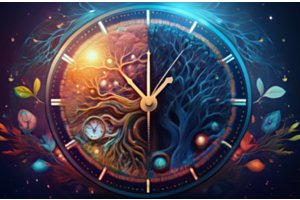
  5. What is a Circadian Rhythm? And why Light Therapy helps reset your Biological Clock

    Illustration of the circadian rhythm with day–night cycle, biological clock and the influence of light

    Our bodies run on an ingenious internal clock: the circadian rhythm. This rhythm controls not only our sleep, but also our hormones, energy levels, digestion, and even our mood. What many people don't know is that this biological clock does not run exactly 24 hours. As a result, our rhythm can quickly become disrupted—especially during the darker months, with irregular working hours, or due to excessive screen use. In this blog, you will discover how the circadian rhythm works, why it sometimes becomes unbalanced, and how you can restore your energy, sleep, and well-being through the smart use of light.

    What is the circadian rhythm?

    The circadian rhythm is an internal 24-hour cycle that determines when you are awake, alert, hungry, and sleepy. It is also known as the biological clock or biorhythm. It is controlled by a small “central clock” in the brain: the suprachiasmatic nucleus (SCN), a small but crucial area in the hypothalamus, deep within the brain. The hypothalamus regulates all

    Read more »
  6. Bring Balance into Your Home with the Copper Lemniscate and Feng Shui

    Copper lemniscate on wooden surface – Feng Shui decor for balance in the home.

    In a world full of stimuli, we are increasingly seeking peace and balance in our living environment. According to the ancient teachings of Feng Shui, the way we arrange our space influences the energy that flows through it — and therefore also how we feel in that space. By consciously using shapes, materials, and symbols, we can support and balance the energy in our homes. A beautiful example of a contemporary object that fits this description is the Copper Lemniscate from Meditech Europe. This unique object combines the power of natural copper with the symbolism of the lemniscate — the sign of infinite connection — and invites harmony into the home.

    What is Feng Shui?

    Feng Shui is an ancient Chinese philosophy that focuses on finding harmony between people and their environment. The name literally means wind and water—two natural forces that symbolize movement and balance. According to this teaching, a life energy called chi flows through everything. When that energy can move freely,

    Read more »
  7. Migraine: Causes and Symptoms from Different Medical Perspectives

    Woman with migraine holding head, red light highlighting brain pain.

    What is migraine?

    Migraine is a common, chronic brain disorder characterized by recurring, often severe headache attacks. Unlike ordinary tension headaches, migraines are often accompanied by symptoms such as nausea, sensitivity to light and sound, and sometimes visual or physical warning signs, known as aura. The exact cause of migraine is not yet fully understood, but it is believed to be a combination of genetic predisposition, hormonal fluctuations, impaired processing of stimuli in the brain, and influencing lifestyle factors. Known triggers include stress, lack of sleep, bright light, strong smells, and certain foods such as alcohol, chocolate, and mature cheese.

    Common symptoms of migraine

    The symptoms of migraine can vary from person to person and from attack to attack, but the most common symptoms are:

    • Severe, throbbing headache, often on one side of the head

    • Nausea and sometimes vomiting

    • Sensitivity to light, sound, and smells

    • Reduced ability to concentrate during an attack

    • Sometimes

    Read more »
  8. Osteoarthritis: Causes and Symptoms from Different Medical Perspectives

    Illustration of a knee with osteoarthritis, showing visible bone structures and a red glow indicating inflammation and pain in the joint.

    Osteoarthritis is a common form of rheumatic disease characterized by the degeneration of cartilage in the joints. This wear leads to stiffness, pain, swelling, and reduced mobility. Although osteoarthritis often occurs in older adults, younger individuals may also develop it due to overuse, genetic predisposition, or injury. In this blog, we explore osteoarthritis through various medical perspectives. Each approach offers a unique view on causes, symptoms, and possible treatments.

    Common Symptoms of Osteoarthritis:

    • Joint pain during movement

    • Morning stiffness (short duration)

    • Reduced mobility

    • Swelling or creaking joints

    • Gradual worsening of symptoms

    Causes of Osteoarthritis from Different Medical Perspectives

    Western Medicine: Mechanical Wear and Inflammation

    Western medicine sees osteoarthritis as a degenerative process of cartilage, often caused by aging, obesity, improper load, or genetics. As cartilage deteriorates, inflammatory responses occur in the joint. Treatment typically includes

    Read more »
  9. Oil Pulling: Practical Tips for a Flying Start

    Georganics oil pulling mouthwash being poured into a spoon, ready for use in a natural outdoor setting.

    Oil pulling - you hear about it more and more. This age-old technique of rinsing your mouth with oil is gaining popularity as a natural way to support your oral health. But how exactly does it work? When do you do it? And above all, how do you make it a fine, feasible routine? In this blog, we take you step by step through the process. With practical tips for beginners and a brief look at the Ayurvedic origin of oil pulling. So you can easily get started - in a way that suits you.

    What exactly is Oil Pulling?

    Oil pulling is a natural way to cleanse your mouth by rinsing with vegetable oil. The oil “pulls” as it were impurities and bacteria out of your mouth, which can contribute to fresh breath, a cleaner feeling and healthy teeth and gums.

    The origins of oil pulling lie in Ayurveda, a traditional health science from India. There it has been practiced for thousands of years as part of the daily morning ritual, also known as dinacharya. Within this holistic approach, it's all about balance

    Read more »
  10. Alzheimer's Disease: Causes and Symptoms from Different Medical Perspectives

    Alzheimer's Disease: Causes and Symptoms from Different Medical Perspectives

    What is Alzheimer's Disease?

    Alzheimer’s disease is a progressive neurological condition that affects memory, thinking, and ultimately daily functioning. It is the most common form of dementia and is characterized by the buildup of amyloid plaques and tau proteins in the brain, leading to nerve cell damage and cognitive decline. But what exactly causes Alzheimer’s? Depending on the medical perspective, the causes are interpreted differently. In this comprehensive blog, we analyze the causes and symptoms of Alzheimer’s disease from various medical viewpoints.

    Common Symptoms of Alzheimer's Disease:

    • Memory loss, especially of recent events

    • Confusion and disorientation

    • Difficulty with language and communication

    • Loss of logical thinking and problem-solving skills

    • Mood and behavioral changes

    • Loss of independence in daily activities

    Causes of Alzheimer's Disease from Different Medical Perspectives

    Western Medicine: Amyloid Plaques and Genetic Factors

    In Western medicine, Alzheimer’s is seen as

    Read more »
Page
Made with StoreFrame.io Copyright © Meditech Europe