Solfeggio Frequencies: What They Mean and Where They Come From
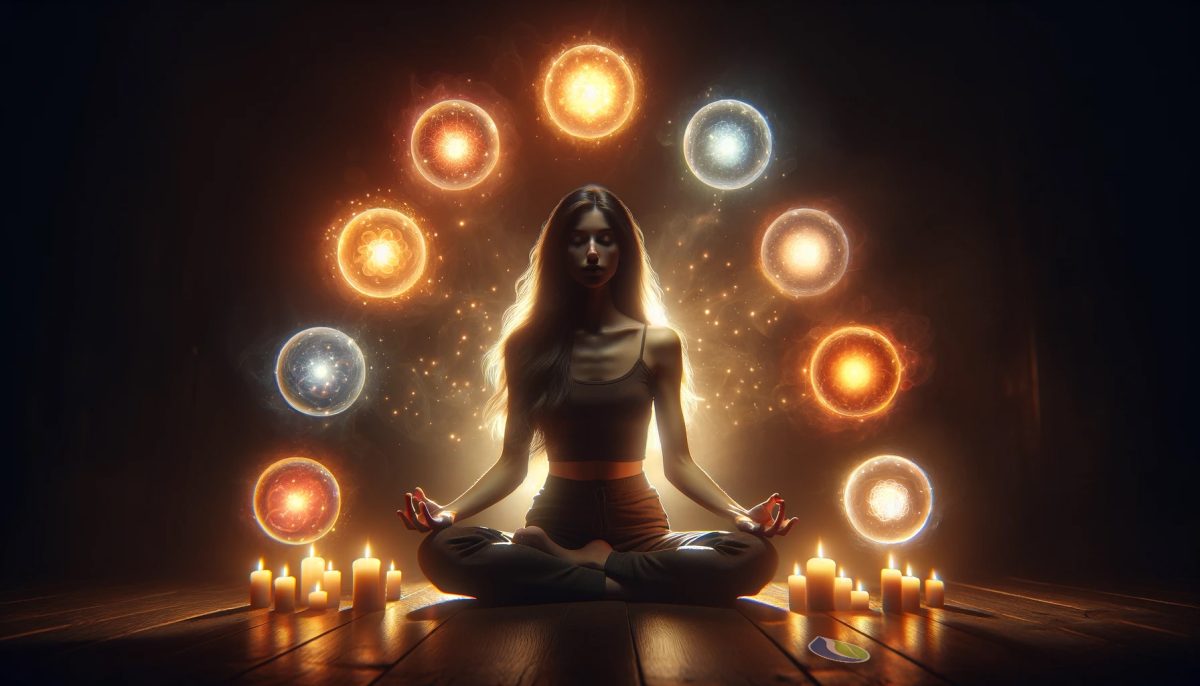
Solfeggio frequencies are nine tones, from 174 to 963 hertz, that you often come across in meditation music and on YouTube. The names of six of them are almost a thousand years old; the numbers themselves are much younger and became known in the 1990s. In this blog you can read what tradition says about each tone, where they come from, what has and hasn't been researched, and you can listen to them yourself.
The nine tones at a glance
| Tone | Syllable | Linked in tradition with | Chakra |
|---|---|---|---|
| 174 Hz | – | safety, a sense of grounding | – |
| 285 Hz | – | renewal | – |
| 396 Hz | UT | letting go | root chakra |
| 417 Hz | RE | change | sacral chakra |
| 528 Hz | MI | love and harmony, also called "the miracle tone" | solar plexus chakra |
| 639 Hz | FA | connection with others | heart chakra |
| 741 Hz | SOL | expression and clarity | throat chakra |
| 852 Hz | LA | intuition | third eye chakra |
| 963 Hz | – | unity and awareness | crown chakra |
174, 285 and 963 Hz have no syllable. They were added to the series later.
Where do they come from?
It starts in the eleventh century with the Italian monk Guido of Arezzo. He was looking for a way to teach choir singers melodies more quickly and used a well-known hymn to John the Baptist, Ut queant laxis. Each line began one note higher, and the first syllables, ut, re, mi, fa, sol and la, became the names of the notes. That "ut" later became "do", as we know it today.
The frequencies themselves have nothing to do with this. The monks sang the syllables, not these numbers; nobody could measure a pitch in hertz back then. The numbers come from the American Joseph Puleo, who said he found them in numbers from the biblical Book of Numbers. They became known in the late 1990s through a book by Leonard Horowitz. Others later added 174, 285 and 963 Hz.
So it is a young tradition with an old name. That doesn't make it any less interesting, but it helps to know the difference.
The tones one by one
Below you can play each tone. Turn the volume down first, especially with headphones.
Calculated for a 30 cm steel plate, 0.5 mm thick, mounted at the centre.
Listen to the Solfeggio tones
Tap a tone. The sand forms a pattern to match.

In spiritual tradition, the tones are also linked to the seven chakras, the energy centres that yoga and Hinduism place in the body, from the base of the spine to the crown of the head. How the link works differs from source to source; below is the arrangement you will come across most often. When you choose a tone in the player, you will also see which chakra goes with it.
174 Hz. The lowest tone in the series, a deep, round sound. It is linked with safety and calm, a feeling of solid ground under your feet. In most chakra arrangements it has no chakra of its own, and neither does 285 Hz.
285 Hz. A little higher, still warm. In tradition it stands for renewal, a fresh start.
396 Hz (UT). The first of the six original tones. It is linked with letting go: leaving old worries or patterns behind. In the chakra arrangement it belongs to the root chakra.
417 Hz (RE). In tradition it stands for change and making room for something new. It belongs to the sacral chakra.
528 Hz (MI). The best known of all, often called "the miracle tone". You'll find it in a lot of meditation music, where it is linked with love and harmony. It belongs to the solar plexus chakra.
639 Hz (FA). The tone of connection, with the people around you and with yourself. It belongs to the heart chakra.
741 Hz (SOL). Linked with expression: saying what you mean, thinking clearly. It belongs to the throat chakra.
852 Hz (LA). A high, light tone. In tradition it belongs to intuition and inner knowing. It belongs to the third eye chakra.
963 Hz. The highest tone in the series. It is linked with unity and a wider awareness, and is sometimes called "the tone of the gods". It belongs to the crown chakra.
What about 432 Hz?
432 Hz is often mentioned in the same breath as the Solfeggio frequencies, but it isn't one of them. This is about something else: concert pitch, the note an orchestra tunes its instruments to.
For a long time every city and every orchestra had its own tuning. In 1939, countries agreed at a conference in London to set the A at 440 Hz. The International Organization for Standardization adopted this in 1955 and laid it down in 1975 in the standard ISO 16. Some musicians prefer 432 Hz because they find it warmer or softer. That is a matter of taste and tradition. In the player above you can listen to 432 and 440 Hz side by side and hear for yourself what you think.
What does research say?
Honestly: not much. There has been hardly any research into these particular frequencies, and what there is shows no special effect of these numbers in particular. What people experience while listening comes at least as much from the calm, the music and the moment you take for yourself. That has value too, and you don't need to make a miracle of it to enjoy it.
Listening for yourself
A pure tone, like the ones in the player above, is different from music said to be "at 528 Hz". A pure tone is a single vibration, plain and steady. Music always contains many tones at once; the frequency in the title usually says something about the tuning or about a tone that sounds underneath.
Want to try it? Pick a quiet moment, keep the volume low and listen for a few minutes, with or without headphones. If a tone bothers you, just switch it off. There is no right or wrong way.
Something new every week
We write every week about water, energetic products and frequencies, and about what we come across in practice. No sales talk — just what we have looked into and measured ourselves.
Questions
What is the difference between 432 and 528 Hz?
528 Hz is one of the nine Solfeggio tones. 432 Hz is not a Solfeggio tone but an alternative tuning pitch for music, alongside the usual 440 Hz.
Are Solfeggio frequencies dangerous?
A tone at a gentle volume is not dangerous; the only thing to watch is the volume, especially with headphones.
How long should you listen?
There is no rule. Most people listen for a few minutes up to half an hour, as long as it feels pleasant.
Is there a list of healing frequencies?
Online you'll find many lists of frequencies and what they are supposed to do. They come from the same tradition as the Solfeggio tones, not from research. A frequency is a pitch, not a medicine.
Sources
- International Organization for Standardization (1975). ISO 16: Acoustics – Standard tuning frequency (Standard musical pitch).
- Encyclopaedia Britannica. Ut queant laxis.
 Made with